
FarmBioNet
PROMOTING BIODIVERSITY IS ALSO GOOD FOR THE CLIMATE
After 18 months, the FarmBioNet project demonstrates that biodiversity-friendly agriculture not only protects nature but can also make a significant contribution to climate protection and climate-resilient agricultural systems.
National workshops evaluated biodiversity-enhancing measures based on their benefits for biodiversity, feasibility and acceptance.
The assessment also focused on synergies with climate adaptation and mitigation, farm-level sustainability and the reduction of input costs. Many of the biodiversity-enhancing measures examined in the project simultaneously strengthen the resilience of farms to climate change. Existing measures and incentives—including those in Natura 2000 areas—were documented and their links to climate-related measures were analyzed.
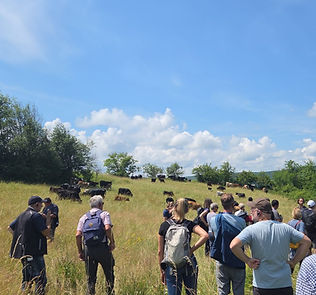
Twenty-four farm visits and an international exchange trip to Romania facilitated further knowledge transfer among practitioners.
© Ivana Milaković

" Current projects
EU Enlargement
PROCESS SUPPORT FOR NATURE CONSERVATION
On behalf of the European Commission, we are designing and moderating a three-day international conference to prepare EU candidate countries for the implementation of European nature conservation law. The focus will be on the Birds Directive and the Habitats Directive, the establishment of the Natura 2000 network and the requirements of the EU Restoration Regulation. Together with experts from the European Commission, the European Environment Agency, and the Bern Convention, we are supporting the administrations of the accession countries in the technical and legal steps of EU accession. This includes, among other things, the designation of protected areas, the development of Natura 2000 networks, the preparation of management systems and the development of national restoration plans. Our role encompasses the design of the event format, the technical support of the speakers and the moderation of the entire process. In doing so, we contribute our many years of expertise in European nature conservation law and in supporting complex transformation processes at the international level, thus assisting states on their path to adopting EU nature conservation law.

Farming for Nature
BIODIVERSITY CAN BE EXPERIENCED ON THE FARM
Especially in a year full of extreme weather, the importance of resilient agroecosystems becomes clear. Our Farming for Nature Biodiversity Ambassadors demonstrate how such systems can be established on farms each year. To showcase their work for biodiversity, the suske consulting team, together with a film crew, accompanied Biodiversity Ambassadors Alois Kiegerl, Carmen Petutschnig-Erschen, Irene Lüdemann, Michael Halbfurter and Silvia Fruhmann on their daily farm work this early summer. Amidst playful animal enclosures, vegetable harvests, colorful wildflower strips and diverse fields, we were particularly impressed by the farmers' tireless commitment to sustainable agriculture. These compelling portrait films will be shown this fall as part of the audience vote. Anyone who would like to get a firsthand impression of the farms can participate in one of the numerous farm walks between July and August or follow the daily life of the ambassadors via the social media channels of farmingfornature_austria or our website.
The future of the moors lies on farms
REWETTING MOORS. THE NEXT ISSURE OF OUR NEWSPAPTER
When Johanna Gerhalter came to the farm in Michelbeuern in 2002, she didn't know much about moors. Today she talks enthusiastically about sedge meadows, water levels and moorland. The decisive impetus was an excursion with a moor expert. “He talked so enthusiastically about the moor, about the many plants and animals, that I thought to myself: I don’t need to go on a safari to Africa – life happens here, at home.”
So initial curiosity turned into a real passion and finally the decision to re-wet a moor on their land. Together with moor experts, she closed drainage ditches with adjustable weirs. Depending on requirements, individual areas can be drained again, for example shortly before mowing. Practical management therefore remains possible and the moor remains intact. This stops the degradation of the peat soil and the moor continues to store CO2 from the air.
The whole story of Johanna Gerhalter will appear in the next few days in our new issue of WIR TUN WAS.

© Johanna Gerhalter